Advertisement








When should a housing society in Mumbai start considering re...
From GST on JDAs to SEBI’s REIT reclassification and the S...
Stay ahead in the world of real estate with our daily podcas...
Stay ahead in the world of real estate with our daily podcas...
Launched in 2017, Bharatmala Pariyojana aims to revolutionize India's highway infrastructure with 34,800 km of roadways at a cost of INR 5.35 lakh crore. By linking industrial hubs, rural areas, and border regions, it enhances connectivity and reduces logistics costs. Key projects include the Delhi-Mumbai Expressway and the India-Myanmar-Thailand Highway. With 18,714 km constructed and 26,425 km contracted as of October 2024, progress is significant despite delays due to land and environmental challenges. Future plans focus on greenfield expressways and intelligent transport systems, reinforcing Bharatmala's role in driving economic growth and fostering regional development.
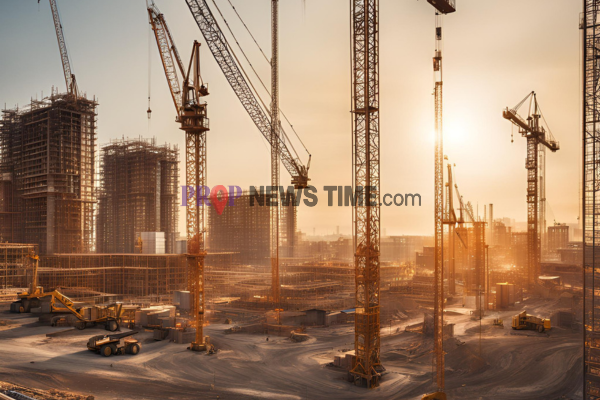
The Bharatmala Pariyojana, launched by the Government of India in 2017, is one of the most ambitious infrastructure projects in the country's history. This program seeks to revolutionize India's highway infrastructure, bolster economic growth, and improve regional connectivity. Envisioned as a cornerstone of the government's vision for New India, the project targets the construction of 34,800 kilometers of roadways, with an estimated cost of INR 5.35 lakh crore. By addressing critical gaps in the country's road network and enhancing logistics efficiency, Bharatmala Pariyojana is poised to transform India's economic and social landscape. Advertisement


The Bharatmala Pariyojana was conceptualized after an extensive study of India's freight and passenger movement patterns. Using satellite mapping and advanced data analytics, planners identified key economic corridors, inter-corridors, and feeder routes requiring development. The study revealed that over 40% of freight in India was transported on highways constituting only 2% of the total road network, underscoring the need for a comprehensive highway development strategy.
The project focuses on connecting major industrial and economic hubs, border areas, and coastal regions. It also aims to provide connectivity to backward districts, tribal areas, and far-flung rural regions. By prioritizing these areas, Bharatmala seeks to reduce regional disparities, promote economic growth, and integrate remote areas into the national economy.
Bharatmala Pariyojana is a web of interconnected routes, strategically designed to cover the length and breadth of India. For example, the Mumbai-Kolkata Economic Corridor links the financial capital of Mumbai with Kolkata, one of India's oldest trade hubs. The Delhi-Mumbai Expressway, another key project, significantly reduces travel time between the two cities, catering to both passenger and freight traffic.
In the northeast, the project connects isolated regions to the national highway network. Roads such as the India-Myanmar-Thailand Trilateral Highway, starting from Moreh in Manipur, extend India's connectivity to Southeast Asia, facilitating international trade and cultural exchange.
Border connectivity is another crucial aspect. The project enhances access to strategic locations like the Wagah Border in Punjab and remote regions in Arunachal Pradesh and Jammu & Kashmir, improving security and enabling better living conditions for residents. Coastal connectivity, integrated with ports, further supports maritime trade by connecting major ports like Mumbai, Kandla, and Chennai to the hinterlands.
The Bharatmala Pariyojana's funding sources are diverse. A significant portion of the funding comes from the Central Road Fund (CRF), which collects cess on petrol and diesel. Toll revenues, including those generated through the Toll-Operate-Transfer (TOT) model, also contribute substantially. Additionally, budgetary allocations and private investments through public-private partnerships (PPPs) play a critical role in financing the project. The government's innovative financing mechanisms have been pivotal in mobilizing resources for such a large-scale initiative.
As of October 2024, significant progress has been made under Bharatmala Pariyojana. Contracts for approximately 26,425 kilometers of roadways have been awarded, and about 18,714 kilometers have been constructed. Projects like the Delhi-Mumbai Expressway and the India-Myanmar-Thailand Trilateral Highway have already started showing tangible results, reducing travel times and enhancing connectivity.
The program also includes the development of Multimodal Logistics Parks to optimize freight handling and reduce transportation costs. Thirty-five locations have been identified for these parks, further supporting India's logistics infrastructure.
Despite its successes, Bharatmala Pariyojana has faced numerous challenges. Land acquisition issues, environmental clearances, and funding constraints have led to delays and cost escalations. The initial timeline for completing Phase I, covering 24,800 kilometers, has been extended from 2022 to 2027-28. Additionally, large-scale construction activities raise concerns about environmental sustainability and community displacement. Addressing these challenges requires robust project management, effective policy reforms, and active stakeholder engagement.
Bharatmala Pariyojana's impact on India's economy is profound. Improved road connectivity has stimulated industrial growth, particularly in remote and underserved regions. By reducing logistics costs and enhancing access to markets, the project has attracted investments in manufacturing, warehousing, and logistics. Economic corridors developed under Bharatmala have led to the emergence of new industrial clusters, boosting employment and regional development.
The program's emphasis on border connectivity has strengthened trade with neighboring countries, enhancing India's position in regional and international markets. Coastal connectivity complements the Sagarmala Project, integrating maritime and road networks to create a seamless logistics ecosystem.
Future phases of Bharatmala Pariyojana aim to further expand the highway network with a focus on greenfield expressways and advanced traffic management systems. The introduction of intelligent transport systems (ITS) and automated toll collection will enhance the efficiency and sustainability of India's road infrastructure. Additionally, the project will continue to prioritize environmentally friendly construction practices, such as afforestation drives and wildlife crossings, to mitigate its ecological impact.
Bharatmala Pariyojana is not just a highway development project; it is a transformative vision for India's future. By bridging connectivity gaps, promoting regional development, and reducing logistics costs, the program has the potential to drive India's economic growth and enhance the quality of life for millions of citizens. While challenges remain, the progress achieved thus far highlights the program's importance in shaping India's infrastructure landscape. With continued focus on innovation, sustainability, and collaboration, Bharatmala Pariyojana is set to become a model for large-scale infrastructure development in the 21st century.

5th Jun, 2025

25th May, 2023

11th May, 2023

27th Apr, 2023
Advertisement








 Facebook
 Whatsapp
