Advertisement








When should a housing society in Mumbai start considering re...
From GST on JDAs to SEBI’s REIT reclassification and the S...
Stay ahead in the world of real estate with our daily podcas...
Stay ahead in the world of real estate with our daily podcas...
The Kanpur Metro is a public transport initiative designed to modernize commuting in Uttar Pradesh’s industrial and educational hub. Phase 1 encompasses two corridors—the 23.8 km Orange Line and the 8.6 km Blue Line—linking key residential, commercial, and industrial areas. Developed by Uttar Pradesh Metro Rail Corporation (UPMRC) with substantial funding from national and international sources, this project integrates advanced technologies, inclusive station designs, and environmental considerations to reduce traffic congestion, pollution, and travel times. With the initial priority corridor operational since December 2021, ongoing construction, and future expansions under consideration, the Kanpur Metro promises a more sustainable, efficient, and prosperous urban future.
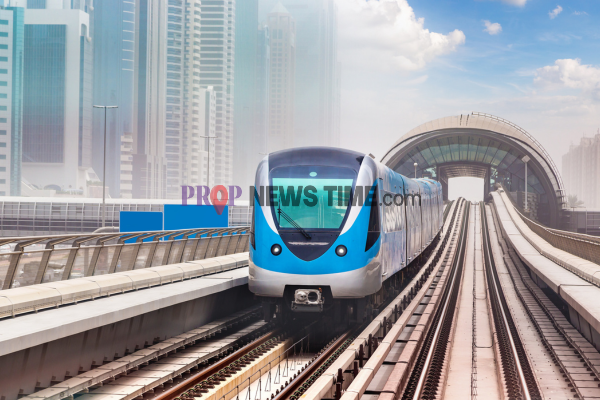
The Kanpur Metro is an ambitious urban transit project designed to alleviate traffic congestion and modernize public transportation in Kanpur, Uttar Pradesh. Known for its rich industrial heritage and educational prominence, Kanpur has long faced challenges related to traffic jams, pollution, and an overburdened public transport system. The Kanpur Metro aims to address these issues by providing a reliable, sustainable, and efficient mode of transit, enhancing the quality of life for the city's residents and supporting its economic growth. Managed by the Uttar Pradesh Metro Rail Corporation (UPMRC), this metro project stands as a testament to the city's commitment to future-ready infrastructure. Advertisement


The Kanpur Metro Phase 1 encompasses two main corridors covering a total length of 32.4 kilometres. This project features a mix of elevated and underground sections and serves densely populated areas, key business districts, and vital educational and industrial hubs. The two primary lines of the Kanpur Metro are: Orange Line (Line 1): This line is 23.8 kilometres long and connects IIT Kanpur in the northwest to Naubasta in the southeast. It includes 22 stations, with notable stops such as Kalyanpur, Rawatpur, Lala Lajpat Rai Hospital, Kanpur Central Railway Station, and Transport Nagar. The route features a mix of 15 elevated stations and 7 underground stations, ensuring seamless connectivity across critical parts of the city. Blue Line (Line 2): Stretching 8.6 kilometres, the Blue Line links Chandrasekhar Azad University to Barra-8 in the southern part of the city. This corridor has 8 stations and will provide better connectivity to residential and commercial areas like Govind Nagar, Kidwai Nagar, and Barra.
The foundation stone for the Kanpur Metro was laid by Prime Minister Narendra Modi on March 8, 2019, marking the start of construction activities. Despite setbacks caused by the COVID-19 pandemic, the project made remarkable progress. On December 28, 2021, the Priority Corridor of the Orange Line, a 9-kilometre stretch from IIT Kanpur to Moti Jheel, was inaugurated and opened to the public. This section includes 9 stations and serves as a crucial link between educational institutions and commercial areas.
By December 2024, significant progress has been made on the remaining sections of the Orange Line, with track-laying completed up to Kanpur Central Station. Trial runs are scheduled for early 2025, and the extension to Naubasta is expected to become operational by mid-2025. The Blue Line is currently under various stages of construction, with plans for completion by 2026.
The total estimated cost for Phase 1 of the Kanpur Metro is approximately INR 11,076.48 crore (about USD 1.56 billion). The funding structure includes contributions from both the Central Government and the Government of Uttar Pradesh, as well as a significant loan component of €650 million (approximately INR 5,551.99 crore) from the European Investment Bank (EIB). This blend of national and international funding reflects the project's importance and the confidence in its potential to transform urban mobility in Kanpur.
The Kanpur Metro is designed with state-of-the-art technology and modern facilities to ensure a smooth and comfortable commuting experience.
The metro system incorporates a range of modern features designed to enhance performance, comfort, and safety. It employs standard gauge tracks (1435 mm) to ensure compatibility with contemporary metro rail infrastructure, while electrification is achieved through a 750 V DC third rail system. Trains travel at a maximum speed of 80 km/h, maintaining an average operational speed of 34 km/h, supported by a Communication-Based Train Control (CBTC) signaling system that enables high-frequency operations and bolsters overall safety. Each three-coach train can be expanded as needed based on demand and comes equipped with air-conditioning, automated announcements, and CCTV surveillance for passenger security. The stations themselves are designed to be inclusive, featuring facilities accessible to differently-abled individuals, as well as conveniences such as escalators, elevators, free Wi-Fi, and RO drinking water facilities.
The Kanpur Metro is not just limited to Phase 1. Plans for future expansions are under consideration, based on ridership data and the city's evolving transportation needs. Additional corridors may be introduced to cover more areas and integrate seamlessly with other public transport systems, such as city buses and regional rail networks.

5th Jun, 2025

25th May, 2023

11th May, 2023

27th Apr, 2023
Advertisement








 Facebook
 Whatsapp
