Advertisement










Private equity has played a significant role in shaping Indi...
In today’s real estate landscape, fitness is often treated...
In this episode of Prop Personalities, we sit down with Hars...
Luxury real estate is one of the most talked-about segments ...
Welcome to Prop Personalities by Prop News Time - a podcast ...
The Lucknow Metro has transformed urban mobility in Uttar Pradesh's capital, easing traffic congestion and improving public transport. Managed by UPMRC, it began with Phase 1A, a 22.88 km Red Line connecting key locations like the airport, Charbagh, and Munshipulia through 21 stations. Operational since 2019, it features modern technology, including CBTC signaling, 750 V DC power, and universal design for accessibility. The system supports high-frequency operations, offering amenities like Wi-Fi and UV sanitization. With daily ridership exceeding 1.3 lakh in 2024, the metro plans an 11.165 km East-West Corridor expansion, enhancing connectivity and supporting sustainable urban growth.
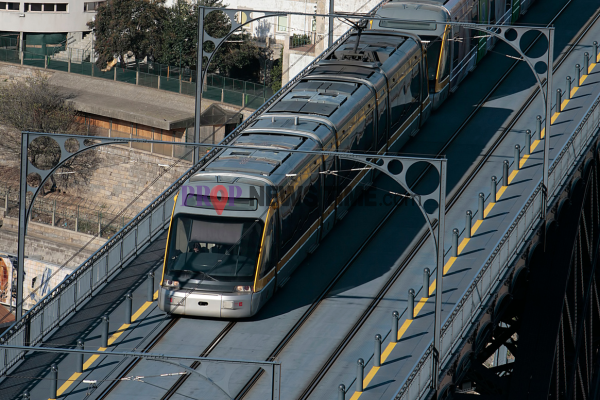
The Lucknow Metro is a shining example of how modern infrastructure can transform urban mobility in one of India's oldest and most vibrant cities. As the capital of Uttar Pradesh, Lucknow is a bustling hub of culture, commerce, and governance, and its growing population has long demanded a sustainable and efficient public transportation system. Managed by the Uttar Pradesh Metro Rail Corporation (UPMRC), the Lucknow Metro has not only eased traffic congestion but also set benchmarks in efficiency, safety, and commuter convenience. Advertisement


The Lucknow Metro project was conceived to tackle the city's worsening traffic and pollution. The foundation stone was laid in March 2014, and construction began in September 2014. In record time, the first section, an 8.5-kilometre stretch from Transport Nagar to Charbagh, was inaugurated on September 5, 2017, and opened to the public the next day. The entire Phase 1A, covering 22.88 kilometres, became fully operational on March 8, 2019. This phase features the Red Line, running from Chaudhary Charan Singh International Airport to Munshipulia, with a total of 21 stations - 17 elevated and 4 underground.
The Red Line connects key locations, serving densely populated residential areas, commercial centers, educational institutions, and transport hubs. Major stations along the route include Transport Nagar, Alambagh, Charbagh Railway Station, Hussainganj, Hazratganj, Vishwavidyalaya, and Munshipulia.
The metro is set to expand further with the proposed East-West Corridor (Phase 1B), which will add another 11.165 kilometres to the network. This corridor will stretch from Charbagh to Vasant Kunj and is estimated to cost INR 5,801 crore. Once completed, this expansion will significantly enhance connectivity, linking historical areas like Aminabad and Chowk to the existing network.
The total cost of completing Phase 1A was approximately INR 6,928 crore. The project was funded through a combination of contributions from the Central Government and the Uttar Pradesh State Government, along with financial support from the European Investment Bank (EIB), which provided a loan of €450 million. The proposed East-West Corridor will require an additional investment of INR 5,801 crore, reflecting the scale and ambition of Lucknow's metro development.
The Lucknow Metro incorporates state-of-the-art technology to ensure safety, efficiency, and passenger comfort. The trains operate on standard gauge tracks (1435 mm) and are powered by a 750 V DC third rail system. Each train comprises four coaches and can accommodate approximately 1,100 passengers.
The Lucknow Metro is characterized by a host of modern features designed to improve efficiency, convenience, and safety. Utilizing Communication-Based Train Control (CBTC) technology, the system supports high-frequency operations and enables real-time monitoring of train movements. Its trains operate at speeds up to 90 km/h, maintaining an average speed of 32-35 km/h to ensure timely travel for commuters. The stations provide a range of passenger amenities, including free Wi-Fi, RO drinking water facilities, escalators, and elevators, while adhering to universal design principles that cater to differently-abled individuals. In terms of safety, the Lucknow Metro was a pioneer in introducing ultraviolet (UV) sanitization for both trains and tokens during the COVID-19 pandemic, setting higher standards for hygiene and public health.
Since its launch, the Lucknow Metro has become an integral part of the city's daily life. On October 15, 2022, the metro recorded a daily ridership of 91,000 passengers, reflecting its growing popularity. In May 2023, it achieved its highest monthly ridership of 21 lakh passengers. On January 1, 2024, the metro set a new record by carrying over 1.3 lakh passengers in a single day. With ongoing expansions and continuous innovation, the Lucknow Metro is poised to play a central role in the city's growth, making it a model for sustainable urban development and efficient public transportation.

5th Jun, 2025

25th May, 2023

11th May, 2023

27th Apr, 2023
Advertisement





 Facebook
 Whatsapp
