Advertisement










Private equity has played a significant role in shaping Indi...
In today’s real estate landscape, fitness is often treated...
In this episode of Prop Personalities, we sit down with Hars...
Luxury real estate is one of the most talked-about segments ...
Welcome to Prop Personalities by Prop News Time - a podcast ...
The Indore Metro is a cutting-edge mass rapid transit system currently under construction in Madhya Pradesh's largest city. Designed to alleviate traffic congestion and promote sustainable mobility, its first phase centers on the 33.53 km Yellow Line loop with 29 stations. Developed by the Madhya Pradesh Metro Rail Corporation Limited (MPMRCL), the project incorporates both elevated and underground sections, modern CBTC signaling, and air-conditioned trains for passenger comfort. Though delayed by the pandemic and logistical hurdles, trial runs have begun on a 5.9 km priority stretch. Expected to open partially in early 2024, the Indore Metro aims to revitalize urban travel, enhance connectivity, and improve quality of life for residents.
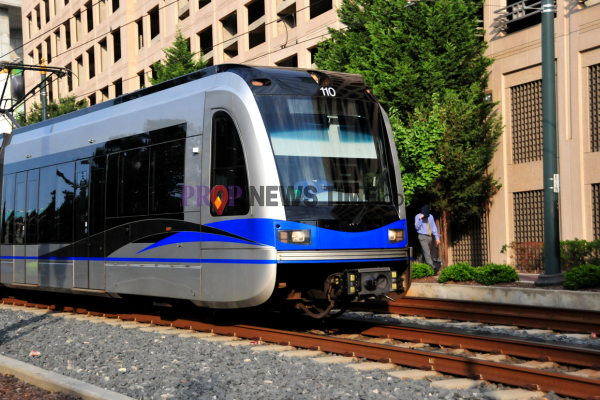
The Indore Metro is a transformative mass rapid transit system under construction in Indore, Madhya Pradesh. As the most populous city in the state and a key commercial hub, Indore has witnessed rapid growth in recent years, leading to worsening traffic congestion and increasing pollution levels. To address these challenges, the Indore Metro project was conceived to provide an efficient, reliable, and eco-friendly public transportation system. This ambitious project aims to improve connectivity, reduce traffic burden, and enhance the quality of life for Indore's residents. Advertisement


The Indore Metro is being developed by the Madhya Pradesh Metro Rail Corporation Limited (MPMRCL), a joint venture between the Central Government and the Government of Madhya Pradesh. The project is designed to cater to the growing population of Indore by offering a modern, high-capacity transit system. The Phase 1 of the metro focuses on the Yellow Line (Line-3), a circular line that will connect key residential, commercial, and industrial areas of the city.
The Yellow Line will cover a total length of 33.53 kilometres and will include 29 stations. The line features both elevated and underground sections, strategically designed to navigate Indore's diverse urban landscape. Once operational, this corridor is expected to provide seamless connectivity and significantly ease the pressure on Indore's existing road infrastructure.
The Yellow Line forms a comprehensive loop around Indore, connecting crucial areas and landmarks. The route starts from Bhawarsala Square and passes through major locations such as MR 10 Road, Vijay Nagar Square, Radisson Square, Bengali Square, Geeta Bhawan Square, Palasia Square, and Indore Railway Station, before culminating at Indore Airport. This alignment ensures that the metro serves densely populated neighborhoods, important business districts, and key transport hubs, making it convenient for daily commuters, students, and tourists alike.
The foundation stone for the Indore Metro was laid by the Chief Minister of Madhya Pradesh in September 2019. However, construction activities faced delays due to the COVID-19 pandemic. Despite these challenges, the project has made notable progress. One significant milestone was the successful trial run conducted on September 30, 2023, along a 5.9-kilometre priority corridor between Gandhi Nagar and Number 3 stations. This trial tested various operational parameters, bringing the metro closer to full-fledged operations. The priority corridor is expected to open to the public in early 2024, marking a crucial step in the project's phased rollout.
The estimated cost for Phase 1 of the Indore Metro is approximately INR 7,500.80 crore (about USD 1 billion). This budget covers infrastructure development, procurement of rolling stock, and the implementation of advanced signaling and communication systems. The project is funded through contributions from the Central Government, the Madhya Pradesh State Government, and loans from international financial institutions such as the Asian Infrastructure Investment Bank (AIIB) and the European Investment Bank (EIB).
Given the scale of the project, careful financial planning is essential to ensure timely completion and operational sustainability. The cost per kilometre for elevated sections is estimated at INR 250 crore, while underground sections cost approximately INR 400 crore per kilometre.
The Indore Metro is designed with cutting-edge technology to ensure efficiency, safety, and passenger comfort. The trains will operate on standard gauge tracks (1435 mm) and will be electrified using a 750 V DC third rail system. The metro system will incorporate a Communications-Based Train Control (CBTC) signaling system, which allows for real-time train monitoring and improves operational safety. The trains are expected to run at a maximum speed of 80 km/h, with an average operating speed of 34 km/h.
Each train will have modern amenities, including air-conditioned coaches, automated announcements, CCTV surveillance, and facilities for differently-abled passengers. Stations will be equipped with elevators, escalators, and digital ticketing systems to enhance commuter convenience.
Like any large-scale infrastructure project, the Indore Metro has faced several challenges. The initial delays caused by the pandemic, coupled with issues related to land acquisition and construction in densely populated areas, have posed obstacles. However, the project has continued to advance due to the commitment of the authorities and the support of international funding agencies.
One of the critical challenges ahead is ensuring adequate ridership to make the metro financially sustainable. To achieve this, the authorities are focusing on improving last-mile connectivity by integrating feeder bus services, e-rickshaws, and pedestrian-friendly pathways. Affordable fare structures and public awareness campaigns will also play a vital role in encouraging people to switch from private vehicles to the metro.
The Indore Metro represents a significant step toward modernizing urban mobility in Madhya Pradesh. With its extensive network, advanced technology, and focus on sustainability, the metro is poised to transform how people travel in Indore. Once fully operational, it will provide a reliable, efficient, and eco-friendly mode of transportation, easing traffic congestion and improving the quality of life for the city's residents.

5th Jun, 2025

25th May, 2023

11th May, 2023

27th Apr, 2023
Advertisement





 Facebook
 Whatsapp
