Advertisement








When should a housing society in Mumbai start considering re...
From GST on JDAs to SEBI’s REIT reclassification and the S...
Stay ahead in the world of real estate with our daily podcas...
Stay ahead in the world of real estate with our daily podcas...
The Mumbai Metro is transforming urban mobility in India's financial capital, easing traffic congestion and reshaping daily commutes. Initiated in 2004 by the Mumbai Metropolitan Region Development Authority (MMRDA), the project envisions a 339.6-kilometre network costing INR 1,53,384 crore. Operational lines include Line 1 (Blue Line), Line 2A (Yellow Line), Line 7 (Red Line), and the underground Line 3 (Aqua Line), improving connectivity and reducing travel times. Despite delays due to environmental concerns and policy indecision, the metro has achieved milestones like a daily ridership of 500,000 on the Blue Line. Expanding further, it promises a sustainable urban future.
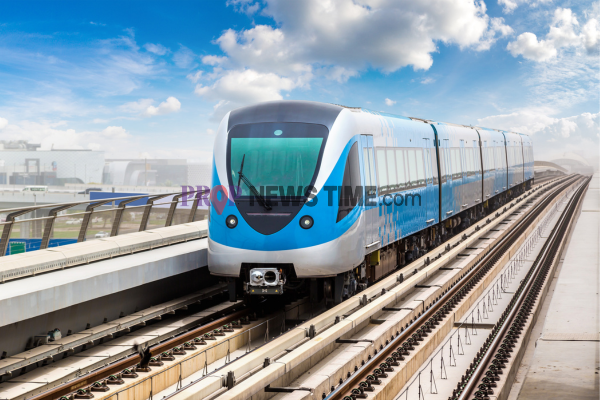
The Mumbai Metro, envisioned to alleviate the city's notorious traffic congestion and provide efficient public transportation, has been a transformative project for India's financial capital. Over the years, it has evolved into a lifeline for millions, reshaping daily commutes and urban mobility. Advertisement


The Mumbai Metro, envisioned as an urban Mass Rapid Transit System (MRTS), aims to transform transportation in Maharashtra's bustling capital. Initially planned in 2004, the Mumbai Metropolitan Region Development Authority (MMRDA) proposed a 146.5-kilometre master plan comprising multiple metro lines. However, policy indecision-debating between monorail versus metro and EPC versus PPP models-and environmental concerns delayed progress. As a result, only one metro line, connecting Versova, Andheri East, and Ghatkopar, was developed in the suburbs during the initial phase.
The Mumbai Metropolitan Region Development Authority (MMRDA) initiated the metro project to address the burgeoning transportation demands of a rapidly growing metropolis. With an estimated total cost of INR 1,53,384 crore, the ambitious plan aims to establish a 339.6-kilometre network upon completion, positioning it among the most extensive metro systems globally.
Line 1, the Blue Line, commenced operations on June 8, 2014, connecting Versova, Andheri, and Ghatkopar over 11.4 kilometres. Developed at an approximate cost of INR 4,321 crore, it has significantly reduced travel time across these bustling neighborhoods.
The Yellow Line, comprising Lines 2A and 2B, extends from Dahisar East to Mandale, covering a combined distance of 42.2 kilometres. Line 2A became fully operational on January 19, 2023, at an estimated cost of INR 6,410 crore. This line has enhanced connectivity between the western suburbs and the city's commercial hubs.
Line 7, the Red Line, spanning 16.5 kilometres between Dahisar East and Andheri East, also commenced full operations on January 19, 2023, with a project cost of approximately INR 6,208 crore. This line has alleviated congestion on the Western Express Highway, offering commuters a faster alternative.
The Aqua Line, or Line 3, marks Mumbai's foray into underground metro systems. Stretching 33.5 kilometres from Cuffe Parade to Aarey Depot, it features 27 underground stations and one at-grade station. The project's cost escalated to INR 37,000 crore due to various factors, including delays and increased material costs. Phase 1, covering the section between Bandra Kurla Complex (BKC) and Aarey JVLR, was inaugurated on October 5, 2024, promising to revolutionise north-south connectivity.
The journey of the Mumbai Metro has been fraught with challenges. Land acquisition issues, environmental concerns, and legal hurdles have often delayed progress. Notably, the construction of the car shed in Aarey Colony faced significant opposition from environmental activists, leading to project delays and cost overruns. Despite these obstacles, the metro has achieved remarkable milestones. In August 2024, the Blue Line recorded a daily ridership of over 500,000 commuters for the first time in its decade-long history, underscoring its growing popularity and indispensability.
The Mumbai Metro's expansion continues with several lines under construction. Line 4 (Green Line) will connect Wadala to Kasarvadavali over 32.32 kilometres, featuring 32 stations, with a projected cost of INR 14,549 crore. Line 5 (Orange Line) will span 24.95 kilometres from Thane to Bhiwandi and Kalyan, encompassing 17 stations, with an estimated cost of INR 8,416 crore. Line 6 (Pink Line) will link Swami Samarth Nagar to Vikhroli over 15.18 kilometres, including 13 stations, at a projected cost of INR 6,716 crore.
These developments are set to further enhance connectivity, reduce road congestion, and contribute to Mumbai's sustainable urban growth. As the network expands, it is expected to become an even more integral part of the city's transportation infrastructure, offering a reliable and efficient alternative to traditional modes of transit. In conclusion, the Mumbai Metro stands as a testament to the city's resilience and commitment to modernisation. While challenges persist, the strides made thus far reflect a promising trajectory toward a more connected and commuter-friendly Mumbai.

5th Jun, 2025

25th May, 2023

11th May, 2023

27th Apr, 2023
Advertisement








 Facebook
 Whatsapp
