Advertisement








When should a housing society in Mumbai start considering re...
From GST on JDAs to SEBI’s REIT reclassification and the S...
Stay ahead in the world of real estate with our daily podcas...
Stay ahead in the world of real estate with our daily podcas...
The Mumbai Monorail, India's first monorail system, aimed to ease traffic congestion and improve connectivity in underserved areas. Proposed by the MMRDA in 2005, the INR 3,000 crore project spans 19.54 kilometres with 17 stations. Phase I opened in 2014 between Chembur and Wadala Depot, while Phase II to Sant Gadge Maharaj Chowk became operational in 2019. Despite advanced features like Communication-Based Train Control (CBTC), the monorail has faced challenges, including technical breakdowns and low ridership, leading to financial losses. Efforts like high-capacity rakes and operational restructuring aim to address issues, but its role in Mumbai's transit ecosystem remains debated.
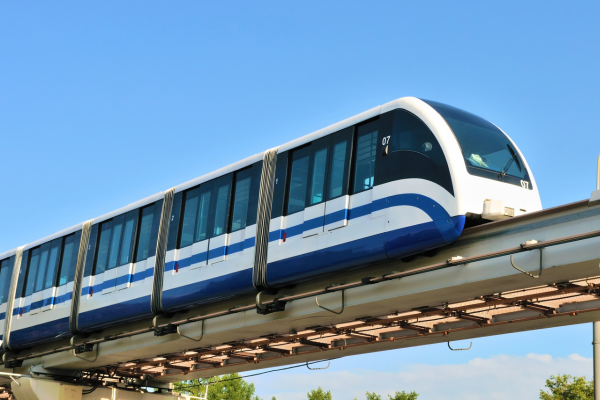
The Mumbai Monorail, India's first monorail system, was conceived as an innovative urban transit solution aimed at easing traffic congestion and improving connectivity in areas underserved by other public transport systems. Proposed by the Mumbai Metropolitan Region Development Authority (MMRDA) in 2005, the project sought to complement Mumbai's existing suburban railway network and planned metro systems. In November 2008, a joint venture between Larsen & Toubro and Malaysian firm Scomi Engineering Bhd was awarded the contract to design, build, and operate the monorail system. The total estimated cost of the project was INR 3,000 crore, covering both phases of its construction. Advertisement


Construction commenced in January 2009 along the Chembur-Wadala-Jacob Circle route, with an initial completion target of April 2011. However, the project faced multiple delays due to various challenges, including technical issues and contractor performance.
The Mumbai Monorail was developed in two phases along a single corridor, now known as Line 1. Phase I, an 8.8-kilometer stretch connecting Chembur to Wadala Depot, became operational on February 2, 2014. This section included stations at Chembur, VNP and RC Marg Junction, Fertilizer Township, Bharat Petroleum, Mysore Colony, Bhakti Park, and Wadala Depot. Phase II, extending 11.2 kilometre from Wadala Depot to Sant Gadge Maharaj Chowk, opened to the public on March 4, 2019. It added key stations such as GTB Nagar, Antop Hill, Acharya Atre Nagar, Wadala Bridge, Dadar East, Naigaon, Ambedkar Nagar, Mint Colony, Lower Parel, and Sant Gadge Maharaj Chowk. With the completion of Phase II, the entire corridor now spans 19.54 kilometre and includes 17 stations.
The monorail operates with advanced technical features, including a Communication-Based Train Control (CBTC) signaling system integrated with Automatic Train Control (ATC), Automatic Train Protection (ATP), Automatic Train Supervision (ATS), and Unattended Train Operation (UTO). It is powered by a 25kV, 50Hz overhead electrification system and operates on a standard gauge of 1,435 mm, with a designed speed of up to 80 km/h and an average operating speed of 65 km/h. These technical specifications aimed to ensure reliability and efficiency, but the system faced significant operational challenges.
Despite its ambitious goals, the Mumbai Monorail has struggled with various issues since its inception. Frequent technical breakdowns and unreliable services have hampered its performance, leading to lower-than-expected ridership. Reports indicate that daily passenger numbers remain significantly below projections, exacerbating financial losses that have already crossed INR 529 crore. Critics have labeled the project as a -white elephant,- pointing to its limited utility and operational inefficiencies.
In an effort to address these challenges, the MMRDA has implemented several measures to improve the monorail's performance. In January 2024, the Monorail Project Implementation Unit was merged with the Maha Mumbai Metro Operation Corporation Limited (MMMOCL) to streamline operations and reduce costs. Additionally, trials for high-capacity monorail rakes began in May 2024. These new rakes feature advanced systems and offer a 10% increase in passenger capacity, accommodating 625 passengers per train compared to the previous capacity of 568. The aim is to improve service frequency and reliability, thereby boosting ridership.
Despite these efforts, the future of the Mumbai Monorail remains uncertain. While it was initially envisioned as a feeder system that could seamlessly integrate with Mumbai's metro and bus networks, its current role in the city's broader transportation framework is still a matter of debate among policymakers and urban planners. The Mumbai Monorail's journey, characterized by delayed timelines, budget overruns, and operational setbacks, offers valuable lessons in implementing large-scale urban transport projects. It also underscores the need for robust planning, efficient execution, and sustainable operations to achieve long-term success in public infrastructure projects. As it stands, the monorail continues to be a part of Mumbai's transport landscape, albeit with considerable room for improvement.

5th Jun, 2025

25th May, 2023

11th May, 2023

27th Apr, 2023
Advertisement








 Facebook
 Whatsapp
