Advertisement










Private equity has played a significant role in shaping Indi...
In today’s real estate landscape, fitness is often treated...
In this episode of Prop Personalities, we sit down with Hars...
Luxury real estate is one of the most talked-about segments ...
Welcome to Prop Personalities by Prop News Time - a podcast ...
Western Hyderabad, a hotspot for prime real estate, has become a center for unauthorized construction, with nearly 40% of the city's illegal buildings concentrated in the region. The Greater Hyderabad Municipal Corporation (GHMC) identified 1,500 such structures citywide this year, demolishing 1,000, primarily in areas like Moosapet, Kukatpally, and Chandanagar. Violations include unauthorized extra floors, encroachments, and deviations from approved plans. Some property owners exploit legal loopholes, misuse permits, or secure unauthorized utility connections. Following incidents like the demolition of a tilted building in Siddique Nagar, GHMC launched surveys to address violations, focusing on congested zones. Stricter enforcement aims to curb this growing issue.
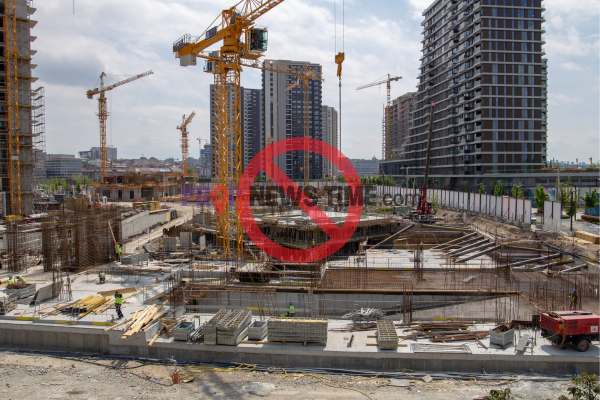
The western part of Greater Hyderabad, known for its prime real estate potential, has become a hub for illegal construction activities. Reports indicate that nearly 40% of the city's unauthorised buildings are concentrated in this region, raising concerns about compliance with municipal regulations. So far this year, the Greater Hyderabad Municipal Corporation (GHMC) has identified approximately 1,500 unauthorised constructions across the city. Of these, 1,000 structures have been demolished, with a significant portion located in the western areas. Key regions affected include Moosapet with 209 demolitions, Kukatpally with 142, and Chandanagar with 81. Advertisement


GHMC officials highlighted that violations often include the construction of extra floors, encroachments on government or private land, road encroachments, deviations from approved building plans, and unauthorised construction without permits. Officials explained that some property owners deliberately avoid paying government fees for permissions and taxes by acquiring permits for G+1 structures (ground floor plus one additional floor) and then building extra floors without approval. They noted that many such owners seek stay orders from the courts to delay demolition. Others misuse residential building permits by converting properties into commercial establishments while continuing to pay residential tax rates.
The GHMC has intensified its efforts to address these violations by imposing 100% penalties on unauthorised floors and demolishing portions of buildings that exceed approved limits. According to sources within the GHMC, some property owners exploit loopholes by using house numbers from older structures to obtain water and electricity connections for unauthorised floors. In some cases, they allegedly collaborate with utility workers to secure these services.
Although official records list between 1,000 and 1,500 illegal constructions, residents' welfare associations claim that many more go unreported or unnoticed. GHMC enforcement often occurs in response to complaints or after significant incidents, such as building collapses. A recent example of enforcement was the demolition of a tilted building in Siddique Nagar, Madhapur, which had been constructed without approval. Following the incident, the GHMC launched a comprehensive survey to identify unauthorised structures in Hi-Tec City and Madhapur.
The survey aims to assess the extent of violations, particularly in congested streets. GHMC officials are also investigating how a five-storey building was constructed on a 50-square-yard plot without the required permissions. Residents of Shaikpet have raised concerns about a surge in illegal constructions, leading to water shortages, sewage overflows, parking congestion, and road encroachments. Asif Sohail, president of the Jubilee Hills Constituency Colonies Forum, criticised town planning officials for neglecting these issues. He alleged that some officials allow the construction of multi-storey buildings on small plots and encroachments on water channels (nalas).
Despite government regulations prohibiting the registration of unauthorised floors, there are allegations of complicity by some GHMC officials in supporting these activities.
In response to the Siddique Nagar demolition, the GHMC has committed to a thorough review of illegal construction practices in the region. The survey will focus on congested areas in Madhapur to determine the scale of unauthorised building activities. GHMC officials have acknowledged that many of these constructions violate municipal setback requirements and regulations, prompting intensified efforts to ensure compliance. These developments underscore the need for stricter enforcement and robust planning to curb the growing trend of unauthorised construction in Greater Hyderabad.

5th Jun, 2025

25th May, 2023

11th May, 2023

27th Apr, 2023
Advertisement





 Facebook
 Whatsapp
