Advertisement








When should a housing society in Mumbai start considering re...
From GST on JDAs to SEBI’s REIT reclassification and the S...
Stay ahead in the world of real estate with our daily podcas...
Stay ahead in the world of real estate with our daily podcas...
Mumbai is experiencing a significant transformation, with key developments like Vadhvan Port, Navi Mumbai International Airport (NMIA), and the Navi Mumbai Airport Influence Notified Area (NAINA) reshaping its logistical landscape. Vadhvan Port aims to become a global maritime hub, enhancing trade and creating numerous jobs. The NMIA will alleviate pressure on existing airports and stimulate regional economic growth by attracting businesses. Additionally, NAINA is set to see a surge in real estate demand due to its proximity to the airport. Together, these projects will improve connectivity and drive economic development in the region.
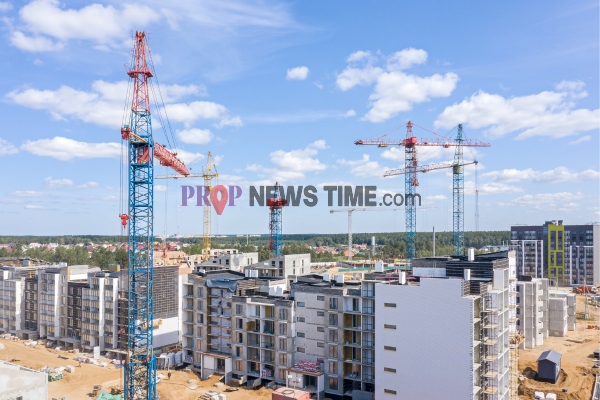
The financial capital of India is undergoing a significant transformation. While the changing skyline of Mumbai, now filled with towering skyscrapers, is hard to miss, many of the improvements at ground level might have escaped notice. For instance, did you know that the city's logistical infrastructure is receiving a major upgrade? Key developments like the upcoming Vadhvan Port, Navi Mumbai International Airport (NMIA), and the Navi Mumbai Airport Influence Notified Area (NAINA) are set to reshape the landscape. Advertisement


Located near Dahanu in the Palghar district, Vadhvan Port is on track to become one of the top ten ports globally, boasting an impressive capacity of 23.2 million twenty-foot equivalent units (TEUs). This deep-water port will provide direct access to international shipping lanes, significantly reducing transit times and operational costs. Once operational, it aims to serve as a world-class maritime hub, bolstering India's trade and economic capabilities by accommodating ultra-large cargo vessels. The infrastructure will feature deep berths and advanced cargo handling systems, all in line with the objectives of the PM Gati Shakti programme, which seeks to revolutionise India's logistics and transportation sectors. By improving Maharashtra's port infrastructure, this project is set to fuel the state's long-term economic growth. The increased capacity for trade and improved logistics will likely attract more businesses to the region, creating a supportive environment for industrial growth and development.
The port will significantly enhance Maharashtra's maritime sector. Positioned about 150 km from Mumbai, in the eco-sensitive Dahanu taluka of Palghar district, it's strategically located to capture a significant share of regional traffic, particularly from South Gujarat. The port's proximity to the Indian Railways' Western Dedicated Freight Corridor and major national highways is expected to further boost its traffic. Moreover, Vadhvan Port is anticipated to play a crucial role in facilitating export-import (EXIM) trade through the India-Middle East-Europe Economic Corridor (MEEC) and the International North-South Transport Corridor (INSTC). This will create opportunities in transportation, logistics, warehousing, and ancillary services. As businesses expand and new enterprises emerge to support port activities, the local economy will experience a ripple effect, leading to increased spending and investment in the region.
The Vadhvan Port project will also spur significant infrastructure development. The Union Cabinet has already approved key road linkages between the port and national highways, as well as rail connections to the existing network and the forthcoming Dedicated Rail Freight Corridor. These enhancements will improve overall connectivity, making it easier for goods and people to move in and out of the area, ultimately boosting economic activity. With environmental concerns in mind, the Vadhvan Port project incorporates sustainable development practices, focusing on minimising environmental impact while adhering to stringent ecological standards.
A project of this magnitude is bound to bring additional benefits. Beyond logistical advantages, the port is expected to create substantial employment opportunities, stimulate local businesses, and contribute to the region's overall economic development. The construction and operation of this port are projected to generate around 1.2 million direct and indirect jobs, providing opportunities for both skilled and unskilled workers. This influx of jobs is likely to benefit local businesses, fostering sustained economic growth and leaving a lasting positive impact on the regional economy. Additionally, the port will create indirect employment across various sectors.
The new airport will provide much-needed capacity relief to the existing Chhatrapati Shivaji Maharaj International Airport in Mumbai. It is expected to act as a catalyst for regional economic growth, attracting businesses in logistics, hospitality, and aviation services, which will, in turn, create significant employment opportunities in the area. A state-of-the-art, globally recognised airport will enhance Maharashtra's international appeal, drawing foreign tourists and investments that will further strengthen the state's economy.
The impact of the airport will be particularly noticeable in the real estate sector, with areas like Panvel, Ulwe, Belapur, and Kharghar, along with several other emerging areas, likely to see a surge in demand. The Navi Mumbai Airport Influence Notified Area (NAINA), covering 225.59 sq km and developed by the City and Industrial Development Corporation (CIDCO), is expected to be at the forefront of this growth. Its proximity to the airport makes it an attractive hub for businesses and residents alike, potentially driving up property values and transforming the region into a thriving economic zone.
The airport's strategic location will enhance regional connectivity within Maharashtra and beyond, facilitating better movement of people and goods. The airport project is expected to lead to the development of new infrastructure, including improved road networks and public transportation, further contributing to the urban development of Navi Mumbai. The Mumbai Trans Harbour Link (MTHL), also known as the Atal Setu, will reduce travel time between Mumbai and Navi Mumbai to just 20 minutes, providing seamless access to the Third Mumbai or NAINA. The MTHL will undoubtedly be a boon for Navi Mumbai's economic development, especially in the real estate sector. Over the next decade, Navi Mumbai is poised not only to complement but also to co-lead the economic growth of the Mumbai Metropolitan Region (MMR), with major infrastructure projects driving its rise.
The ongoing developments in Mumbai, particularly the Vadhvan Port and Navi Mumbai International Airport, represent a transformative phase for the region's economy and infrastructure. These projects will not only enhance trade and logistics but also create substantial employment opportunities and stimulate local businesses. As NAINA emerges as a vital economic zone, the resulting improvements in connectivity and accessibility will further drive real estate growth. Overall, these initiatives position Mumbai and its surrounding areas for robust economic development, ensuring a promising future for both residents and businesses alike.

5th Jun, 2025

25th May, 2023

11th May, 2023

27th Apr, 2023
Advertisement








 Facebook
 Whatsapp
