Advertisement








When should a housing society in Mumbai start considering re...
From GST on JDAs to SEBI’s REIT reclassification and the S...
Stay ahead in the world of real estate with our daily podcas...
Stay ahead in the world of real estate with our daily podcas...
The Cabinet recently approved three major railway projects worth nearly INR 6,500 crore. These include two new rail lines and one multi-tracking project, expected to be completed by 2028-29. The projects will cover seven districts across Odisha, Jharkhand, Chhattisgarh, and West Bengal, adding nearly 300 route kilometers to the Indian Railways network. Key projects include a new line between Jamshedpur and Asansol, line doubling between Sardega and Bhalumuda. These initiatives will enhance connectivity, particularly for freight transport, benefiting around 1,300 villages and 30 lakh people. The projects will also reduce carbon emissions equivalent to planting 9.7 crore trees.
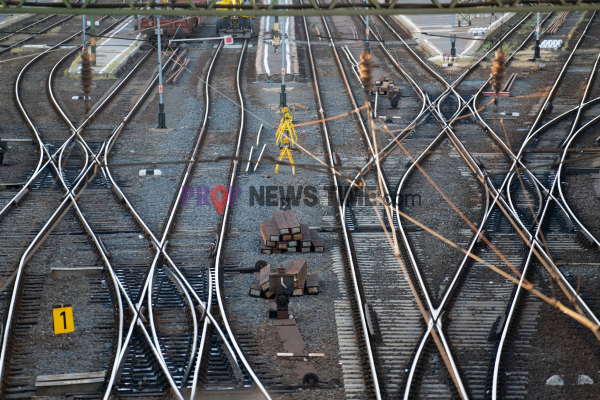
The Cabinet recently approved three significant railway projects with a total investment of nearly INR 6,500 crore. These projects include the establishment of two new railway lines and one multi-tracking project, all aimed at enhancing the infrastructure of Indian Railways. The projects are scheduled for completion by 2028-29. Advertisement


Ashwini Vaishnaw, Minister of Railways, IT, and Information & Broadcasting, provided details about these projects, which span across seven districts in four Indian states-Odisha, Jharkhand, Chhattisgarh, and West Bengal. These new developments will add approximately 300 route kilometers (RKMs) to the Indian Railways network, further strengthening the country's transportation system.
The first project involves laying a new railway line between Jamshedpur and Asansol, connecting Purulia. This addition will cover 121 RKMs and is expected to cost INR 2,170 crore. It will create a vital link between Jharkhand and West Bengal, improving connectivity along major trunk routes such as Delhi-Howrah and Howrah-Mumbai. Vaishnaw highlighted that this section will play a crucial role in transporting coal and iron ore to steel plants in Burnpur and Durgapur, as well as facilitating the movement of finished steel products.
The second project focuses on improving connectivity between Sardega in Odisha's Sundargarh district and Bhalumuda in Chhattisgarh's Raigarh district. This project involves doubling the existing railway lines over a distance of 37 kilometers at an estimated cost of INR 1,360 crore. This enhancement will significantly improve the railway link between Odisha and Chhattisgarh.
The third project will cover the distance between Bargarh Road and Nawapara Road, adding 138 RKMs to the railway network at a cost of INR 2,926 crore. This project will impact two key districts in Odisha-Bargarh, known as the rice bowl of the state, and Nawapara, an aspirational district.
According to the Minister, these new railway lines will connect around 1,300 villages and serve a population of approximately 11 lakh, while the multi-tracking project will enhance connectivity for about 19 lakh people. Vaishnaw also mentioned that the capacity augmentation resulting from these projects is expected to generate an additional 45 million tonnes of freight traffic annually. Furthermore, the shift to railways for logistics needs will lead to a significant reduction in carbon emissions, equivalent to planting 9.7 crore trees.
In conclusion, the Cabinet's approval of three major railway projects with a total investment of nearly INR 6,500 crore signifies a substantial boost to India's transportation infrastructure. These initiatives will establish new railway lines and enhance existing ones across key regions, improving connectivity among Odisha, Jharkhand, Chhattisgarh, and West Bengal. By adding approximately 300 RKMs to the Indian Railways network and benefiting around 30 lakh people, these developments are expected to facilitate efficient logistics, bolster local economies, and significantly reduce carbon emissions. This commitment to enhancing railway infrastructure underscores the government's focus on sustainable development and economic growth.

5th Jun, 2025

25th May, 2023

11th May, 2023

27th Apr, 2023
Advertisement








 Facebook
 Whatsapp
