Advertisement










Private equity has played a significant role in shaping Indi...
In today’s real estate landscape, fitness is often treated...
In this episode of Prop Personalities, we sit down with Hars...
Luxury real estate is one of the most talked-about segments ...
Welcome to Prop Personalities by Prop News Time - a podcast ...
Kochi Metro Rail Limited (KMRL) began work on the flyover and CEZ Metro station for the Phase II Pink Line project last Saturday, with Industry Minister P Rajeev presiding over the inauguration. Afcons Infrastructure Ltd started the piling for the 11.2 km flyover, part of the INR 1,957.05 crore project, which had a 20-month completion timeline. The entire Phase II was expected to be finished in two years. KMRL had secured INR 914 crore in financial support from the Asian Infrastructure Investment Bank (AIIB). Preliminary work, including test pilings and soil testing, had been completed. System and signaling installation followed, though alternative route plans to alleviate traffic disruption were still pending.
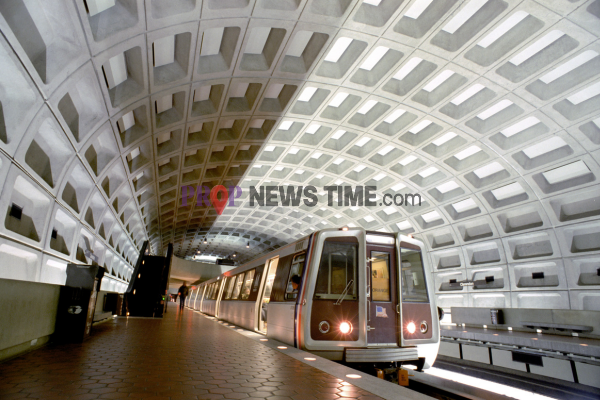
Kochi Metro Rail Limited (KMRL) started building the flyover and CEZ Metro station, part of the Phase II (Pink Line) project, last Saturday. The inauguration ceremony, led by Industry Minister P Rajeeve, took place at 2pm at the CEZ Metro station location, with Hibi Eden MP, Uma Thomas MLA, and other officials present. Advertisement


After the official inauguration, Afcons Infrastructure Ltd, which was awarded the INR 1,957.05 crore contract for the Pink Line project, began the piling work for the flyover. KMRL had granted Afcons the contract to build the 11.2 km flyover for INR 1,141.32 crore following the tender process. The project was scheduled to be completed within 20 months as specified in the contract.
If the 11.2 km stretch was completed on time, KMRL would have been recognized as the fastest metro construction agency in India. KMRL's press release noted that the entire Phase II project was anticipated to be finished within two years. The Asian Infrastructure Investment Bank (AIIB) had approved a financial aid package of INR 914 crore for Phase II. KMRL Managing Director Loknath Behera had previously mentioned that the financial backing from AIIB had been confirmed, and a formal agreement with the agency was set to be signed in October.
Before beginning construction, Kochi Metro had conducted more than five test pilings along the proposed route from JLN Stadium to Infopark. Soil tests and a topographic survey had also been completed at various points along the flyover alignment. The new stations planned for the project included Palarivattom Junction, Palarivattom Bypass, Chembumukku, Vazhakkala, Padamughal, Kakkanad Junction, Cochin SEZ, Chittethukara, KINFRA, and Infopark.
KMRL aimed to finish the system and signaling works within four months of completing the flyover construction. However, the agency had not yet scheduled a meeting to address alternative routes to prevent traffic congestion on the route from the city to the Kakkanad region during the Metro construction.
In conclusion, The launch of the Kochi Metro Phase II (Pink Line) construction represents a pivotal moment for urban mobility in Kochi, with the project promising improved connectivity and efficiency. As Afcons Infrastructure Ltd initiates work on the flyover, backed by a significant investment from the Asian Infrastructure Investment Bank, the framework is being laid for what could be a transformative upgrade to the city's transit system. If completed on schedule, KMRL could set a new benchmark for metro development in India. However, the success of this ambitious project will hinge on KMRL's ability to navigate potential challenges, particularly regarding traffic management during construction, which will be critical in ensuring that public sentiment remains positive as the city undergoes this significant evolution in its transport landscape.

5th Jun, 2025

25th May, 2023

11th May, 2023

27th Apr, 2023
Advertisement





 Facebook
 Whatsapp
