Advertisement










Private equity has played a significant role in shaping Indi...
In today’s real estate landscape, fitness is often treated...
In this episode of Prop Personalities, we sit down with Hars...
Luxury real estate is one of the most talked-about segments ...
Welcome to Prop Personalities by Prop News Time - a podcast ...
15 Feb 2026
Wagle Estate is fast emerging as Thane's answer to Bandra Kurla Complex (BKC), undergoing a major transformation from an industrial MIDC zone into a vibrant commercial and lifestyle-driven micro-market. Established in 1962 as a manufacturing hub, the precinct is now witnessing rapid infrastructure upgrades, metro connectivity, cluster redevelopment and the addition of Grade-A office towers alongside premium residential projects. The integration of workspaces with retail, dining, and wellness amenities is reshaping its identity into a mixed-use urban hub. With improved connectivity to Mumbai and Navi Mumbai, and growing demand for live-near-work housing, Wagle Estate is positioning itself as a self-sustained business and residential cluster driving Thane's next phase of urban growth.Read more
01 Feb 2026
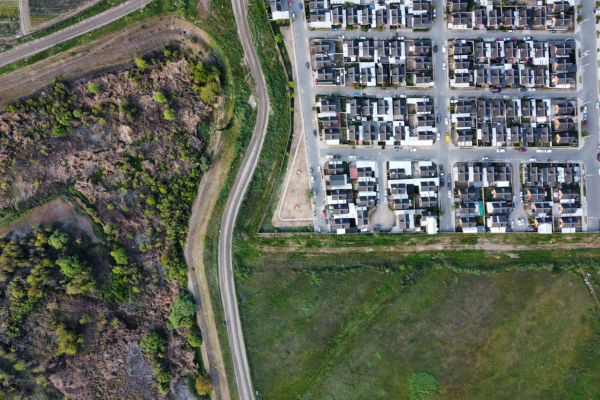
Kundli in Sonipat is steadily emerging as one of the National Capital Region's most promising residential destinations, driven by large-scale infrastructure investments, improving connectivity and comparatively affordable pricing. As Gurugram grapples with land constraints, rising congestion and steep property values, demand is gradually shifting towards well-connected peripheral markets with room for planned growth. Located at the northern edge of NCR, Kundli benefits from direct access to NH 44, the Western Peripheral Expressway, and upcoming mass transit projects including the Delhi Panipat RRTS and the Delhi Sonipat Metro extension. The presence of major educational institutions, industrial corridors and logistics infrastructure is further strengthening end-user demand. Together, these factors are transforming Kundli from a peripheral township into a self-sustaining residential and employment catchment with long-term growth potential.Read more

24 Jan 2026
Mumbai's housing market is undergoing a decisive shift as mid-luxury homes emerge as the strongest growth driver heading into 2026. Once positioned between affordability and premium living, this segment has now become the most resilient and scalable category across the Mumbai Metropolitan Region. Backed by stable interest rates, moderating price growth and a sharp improvement in urban connectivity, mid-luxury housing is attracting a broad base of end-users rather than speculative investors. Data from industry bodies shows that the bulk of new launches and absorption is now concentrated in this segment, particularly in suburban and peripheral locations. With infrastructure projects nearing completion, redevelopment gaining pace and buyer preferences evolving towards better layouts and lifestyle amenities, mid-luxury homes are set to define Mumbai's residential demand cycle in the coming year.Read more

24 Jan 2026
India's megacities are fast emerging as the primary engines of economic growth, demographic transition and real estate expansion. With urbanisation projected to rise from nearly 38 per cent today to about 50 per cent by 2040, cities such as Mumbai, Delhi-NCR, Bengaluru, Hyderabad and Pune are witnessing sustained population inflows driven by employment opportunities, infrastructure development and lifestyle aspirations. This migration is not cyclical but structural, supported by a young population and expanding urban economies. Real estate, contributing 7-8 per cent to GDP, sits at the core of this transformation, shaping residential, commercial and mixed-use development patterns. While infrastructure investment and redevelopment opportunities are unlocking long-term value, challenges around affordability, density and planning persist. How effectively India manages megacity growth today will define its urban and economic future.Read more
18 Jan 2026
India's electric vehicle transition is entering a phase where infrastructure, rather than technology alone, will determine adoption momentum. Residential EV charging is emerging as a critical pillar of this shift, as most vehicles spend a majority of their time parked at home. While public charging networks are essential, they cannot substitute for reliable and convenient home charging, especially in dense urban environments dominated by apartment living. Developers, resident welfare associations and urban planners are increasingly recognising EV charging as a core residential amenity, much like power backup or elevators. From new developments to retrofitting existing housing societies, residential charging infrastructure is set to influence property value, urban planning and everyday mobility choices, shaping how cities adapt to an electric future.Read more

Advertisement


17 Jan 2026
Indian real estate is undergoing a fundamental transformation as the experience economy reshapes how value is defined. While traditional metrics such as carpet area, ceiling height and price per square foot remain important, they are no longer sufficient on their own. Today's buyers evaluate projects based on how spaces support lifestyle, well-being and everyday experiences. Real estate is shifting from being a one-time financial transaction to an ongoing relationship between developers and users. Homes, offices and retail spaces are increasingly designed as living ecosystems rather than static assets. Developers are now expected to deliver not just buildings, but curated environments that respond to human behaviour, aspirations and community needs. In this new paradigm, value is measured by how effortlessly and meaningfully people can live, work and connect within a space.Read more

11 Jan 2026
Goregaon's journey from a mid-suburban residential area to a fast-emerging urban hub reflects Mumbai's broader evolution, with cluster redevelopment now driving its next phase of growth. Once known for open land and modest housing, the suburb has steadily transformed through improved connectivity, commercial development and stronger social infrastructure. The cluster redevelopment model is accelerating this shift by consolidating fragmented plots into planned, mixed-use neighbourhoods that integrate housing, offices, retail and community amenities. Backed by metro connectivity, arterial roads and upcoming infrastructure projects, Goregaon is witnessing rising property values and growing interest from end-users and investors alike. More importantly, cluster projects are addressing the challenge of ageing housing stock by improving safety, liveability and sustainability. Together, these factors are repositioning Goregaon as a modern urban core within Mumbai's western suburbs.Read more

10 Jan 2026
India's Global Capability Centres (GCCs) have undergone a significant transformation over the past two decades, shifting from cost-focused offshore units to strategic hubs that drive innovation and enterprise-wide value. Initially established to leverage cost efficiencies, GCCs were largely confined to transactional and support functions. Today, they play a central role in research and development, digital transformation, product innovation and strategic decision-making. Backed by a deep talent pool, growing digital capabilities and rising trust from global headquarters, India's GCCs now generate intellectual property, accelerate go-to-market strategies and strengthen business resilience, positioning the country as a critical nerve centre for global growth.Read more
03 Jan 2026
The definition of a dream home in India's urban markets is evolving rapidly. While larger homes once dominated buyer preferences, today's homebuyers are placing greater emphasis on neighbourhood quality and overall lifestyle. Safety, seamless connectivity, environmental health, and access to social infrastructure are emerging as decisive factors in purchase decisions. Long commutes, rising health awareness, and the desire for stronger community living are reshaping how buyers assess value. As cities become denser, proximity, convenience, and well-planned surroundings are increasingly outweighing sheer square footage. This shift reflects a more mature, holistic approach to homeownership where quality of life matters as much as the home itself.Read more

29 Dec 2025
India's Global Capability Centres are moving into a decisive phase as their role within multinational enterprises continues to evolve beyond cost-focused delivery. With 2026 approaching, GCCs in India are increasingly positioned as strategic hubs influencing innovation, decision-making and enterprise resilience. These centres are taking on responsibilities spanning product ownership, risk management, platform governance and global operations oversight. The shift reflects changing global business conditions, including geopolitical uncertainty and technological disruption. As a result, GCCs are being valued less for scale and cost efficiency and more for their ability to manage complexity, absorb risk and contribute directly to long-term competitive advantage for global organisations.Read more
Advertisement





