Advertisement






Follow us on Instagram, Facebook, YouTube, X, Spotify, Amazon Music, Apple Music and more.
What really powers the cloud? Behind every Google search, A...
A lot of what defines a home isn’t visible at handover. I...
Private equity has played a significant role in shaping Indi...
Luxury real estate is one of the most talked-about segments ...
Airports play a much bigger role than just enabling travel -...
11 minutes ago
Rane (Madras) Ltd reported an 18.8% year-on-year increase in consolidated revenue to INR 1,050.6 crore for the first quarter of FY27, supported by growth across domestic original equipment (OE), international and aftermarket businesses. EBITDA increased 22% to INR 95.8 crore, while profit after tax (PAT) rose 62.5% to INR 30.1 crore. During the quarter, the company signed a business transfer agreement to acquire the friction business of Hindustan Composites for an enterprise value of INR 370 crore, subject to regulatory approvals, and secured new business with a lifetime value of around INR 2,040 crore.Read more

1 hour ago
The Patna High Court has directed the Bihar government and the National Highways Authority of India (NHAI) to submit detailed reports on the plantation, maintenance and conservation of trees along national highways in the state. The court sought information on measures taken to ensure compensatory plantation, survival of saplings and protection of roadside greenery during highway development. The directions came while hearing a public interest matter concerning environmental protection, highlighting the need to balance expanding road infrastructure with ecological conservation and sustainable development.Read more

2 hours ago
Radisson Blu Guwahati is organising 'Uttar Dakshin – Jab North Met South', a culinary festival at The Great Kebab Factory from July 31 to August 16, 2026. The event brings together regional dishes from North and South India, featuring a menu curated by the hotel's culinary team. The festival includes a range of vegetarian and non-vegetarian specialities prepared using traditional recipes and cooking techniques, alongside themed décor and regional dining elements designed to showcase India's diverse culinary heritage.Read more

2 hours ago
Commercial real estate investment across the Asia Pacific region increased 27% year-on-year during the first half of 2026, supported by stronger office leasing activity and continued rental growth, according to CBRE's 2026 Asia Pacific Real Estate Market Outlook Mid-Year Review. Office investment volumes rose 29%, with Singapore leading regional activity, while Hong Kong SAR recorded improvement and mainland China showed signs of stabilisation. The report also highlighted resilient demand for Grade A office space, driven by artificial intelligence-related occupiers in Singapore and Global Capability Centres (GCCs) in India. Across logistics, retail and hospitality, demand remained concentrated in prime assets amid constrained new supply.Read more

3 hours ago
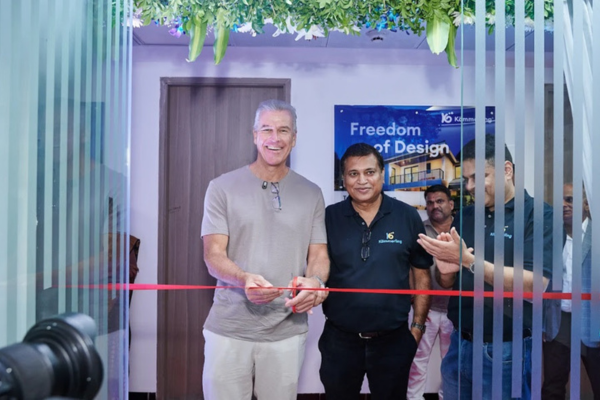
Koemmerling, a brand of Germany-based profine Group, has expanded its presence in the Mumbai Metropolitan Region with the opening of a new experience centre in CBD Belapur, Navi Mumbai. The facility was inaugurated by senior officials of the profine Group and profine India and coincided with the Indian launch of the Allure S46 aluminium minimal sliding door system. The company said the new centre is intended to support architects, developers and homeowners by providing access to its range of uPVC and aluminium window and door systems. The expansion forms part of the company's strategy to strengthen its presence in India's growing infrastructure and building materials market through continued investment and product development.Read more
Advertisement

3 hours ago
Britain's construction sector showed signs of stabilising in July as the pace of decline eased across key segments, according to the latest S&P Global UK Construction Purchasing Managers' Index (PMI). Commercial construction and housebuilding recorded slower contractions, while new orders improved to their strongest level in several months. Employment continued to decline but at a slower pace, and subcontractor availability increased. Input cost inflation also moderated for the second consecutive month. The survey indicated improving business confidence, with construction firms expressing their strongest optimism for the year ahead since before the Iran conflict began.Read more

4 hours ago
Global workplace furniture manufacturer Haworth will open an 8,100 sq ft experience centre in Bengaluru as part of its expansion in India's commercial office market. Located on St. Mark's Road in the city's central business district (CBD), the facility will serve architects, designers, corporate occupiers and channel partners by showcasing workplace solutions manufactured in India to global standards. The expansion comes as Bengaluru continues to account for the company's largest deployment of workplace furniture in the country, supported by sustained demand from Global Capability Centres (GCCs), technology firms and multinational occupiers seeking modern office environments.Read more

4 hours ago
Kolte-Patil Developers Ltd has signed six society redevelopment projects across the Mumbai Metropolitan Region (MMR), adding an estimated gross development value (GDV) of around INR 6,000 crore to its pipeline. The projects are located in Santacruz West, Andheri West (Lokhandwala), Oshiwara, Versova, Ghatkopar East and Vashi, and represent the company's largest annual business development addition in MMR. The developments are expected to be launched over the next six to twelve months, subject to statutory approvals. The expansion follows the company's strategic partnership with Blackstone and strengthens its redevelopment portfolio in Mumbai, where it has been active since 2013.Read more
5 hours ago
Savills Plc has completed its acquisition of US-based real estate investment bank Eastdil Secured LLC for an enterprise value of USD 1.1125 billion (approximately GBP 827 million), following the announcement of the proposed transaction earlier this year. The acquisition expands Savills' real estate investment banking platform across North America while strengthening its presence in Europe, the Middle East, Africa and Asia Pacific. Eastdil Secured will operate as Eastdil Secured Savills, retaining its existing business model within the Savills Group. The combined business will provide advisory services across major real estate sectors and is expected to become the world's second-largest adviser for prime commercial real estate transactions exceeding USD 100 million.Read more

5 hours ago
Micro, Small and Medium Enterprises (MSMEs) have an important role in India’s overall development and remain a key part of the economy, officials said at a vendor development programme in Akola. The two-day programme was organised by the Development and Facilitation Office in Nagpur under the Union Ministry of Micro, Small and Medium Enterprises to support MSMEs and improve their access to government initiatives. Maharashtra State Seeds Corporation Managing Director Dilip Swami stressed the need to ensure that the benefits of Central and state government schemes reach enterprises at the grassroots level.Read more

Advertisement

6 hours ago
Non-Resident Indians (NRIs) continue to view Indian real estate as a long-term investment, driven by infrastructure development, rising housing demand and improving market transparency. Cities such as Gurugram, Bengaluru, Hyderabad, Mumbai Metropolitan Region, Pune and Ahmedabad are emerging as preferred destinations due to their strong economic fundamentals, expanding commercial hubs and modern residential developments. While some markets are attracting investors seeking capital appreciation, others offer stable rental income or retirement-friendly housing options. Choosing the right city depends on an investor's financial goals, preferred asset type and investment horizon.Read more

6 hours ago
Mana Projects has launched its Freedom Month 2026 campaign for residential homebuyers to mark India's 80th Independence Day. The promotional campaign, valid for bookings made between August 5 and 31, offers eligible buyers travel vouchers equivalent to 80 days of staycations across India, subject to specified conditions. The Bengaluru-based developer has also announced a lucky draw featuring gold vouchers, a motorcycle and home makeover vouchers. In addition, the company will organise MANA Freedom Honours 2026, a community initiative recognising students for academic performance and celebrating children through activities linked to India's Independence Day celebrations.Read more

7 hours ago
Wellness-focused design is expected to become a defining feature of Dubai's luxury residential market as developers increasingly incorporate health-oriented planning into new projects. According to the Global Wellness Institute (GWI), the next phase of the sector will see wellness transition from a premium differentiator to a standard component of residential development. Dubai-based luxury developer Keturah has endorsed the findings, calling for greater collaboration among developers, planners, architects and public health experts to advance wellness real estate. GWI projects the global wellness real estate market will exceed USD 1 trillion by 2029, while the UAE continues to rank among the world's fastest-growing wellness property markets.Read more
Advertisement






7 hours ago
The real estate sector expects the Reserve Bank of India (RBI) to keep the repo rate unchanged at its upcoming Monetary Policy Committee (MPC) meeting, as geopolitical tensions, inflationary pressures and global economic uncertainty continue to influence the policy outlook. Industry stakeholders believe a status quo on interest rates would provide greater certainty for developers, investors and homebuyers by ensuring stable financing conditions. While lower borrowing costs remain desirable for the sector, developers say maintaining macroeconomic stability and containing inflation are likely to remain the central bank's priorities. The RBI's MPC is scheduled to meet from August 3 to August 5, with the policy decision due on August 5.Read more

8 hours ago
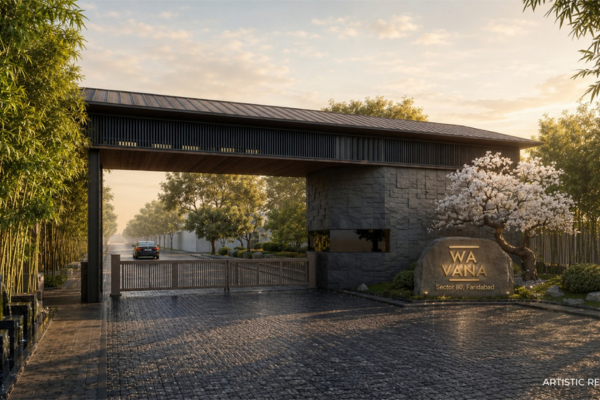
BPTP Limited has launched WA VANA, a premium gated residential enclave within its integrated township in Sector 80, Faridabad. The project draws inspiration from the Japanese philosophy of Ikigai and has been planned as an intergenerational community centred on wellness, sustainability and contemporary living. Registered under HRERA-PKL-FBD-939-2026, the development features an approximately one-acre Japanese Forest with wellness and recreational amenities. Located near the Delhi–Mumbai Expressway, NH-19 and Jewar International Airport, the project is positioned to benefit from improving regional connectivity. The landscape has been designed by international firm Coopers Hill, with a focus on integrating nature into everyday living.Read more
Advertisement

10 hours ago
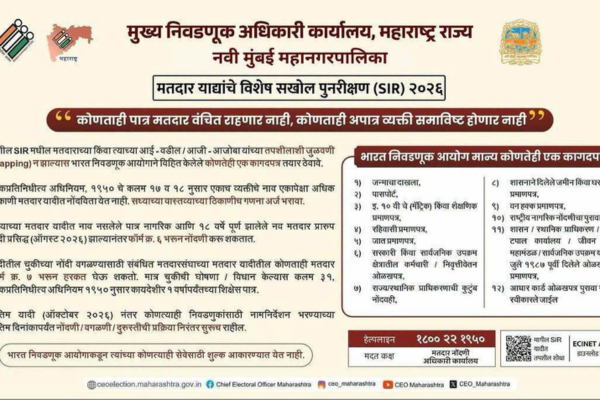
The Navi Mumbai Municipal Corporation (NMMC) has announced that the deadline for submitting Enumeration Forms under the Special Intensive Revision (SIR) of electoral rolls has been extended to 17 August 2026 following directions from the Election Commission of India. The revision exercise, linked to the electoral roll qualifying date of 1 October 2026, has been underway since 30 June through Booth Level Officers (BLOs). The revised schedule also postpones electoral roll restructuring and subsequent stages of the revision process. The civic body has urged eligible voters to submit completed forms without delay, warning that failure to do so could result in their names being omitted from the draft electoral roll, requiring a fresh enrolment process through Form 6.Read more
11 hours ago
JK Lakshmi Cement reported a 27.9 per cent year-on-year decline in its consolidated net profit for the first quarter of FY27, even as revenue and sales volumes recorded healthy growth. Higher operating expenses weighed on profitability during the quarter. The company said cement demand is expected to remain supported by continued infrastructure spending and institutional projects. However, it flagged fuel cost volatility and geopolitical tensions in the Middle East as key risks that could impact input costs. It also highlighted the industry's continued focus on improving operational efficiency and cost optimisation to support long-term growth.Read more

12 hours ago
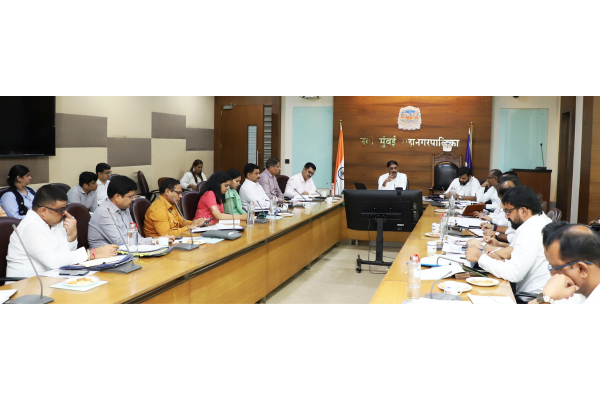
Navi Mumbai Municipal Commissioner Dr Kailas Shinde has directed civic departments to intensify measures to improve public safety and urban management, with particular emphasis on evacuating highly dangerous C1-category buildings and removing abandoned structures. During a departmental review meeting, the Commissioner instructed officials to disconnect electricity, water and sewerage services to unsafe buildings and expedite evacuation measures. He also ordered fire safety audits of coaching centres, the formulation of a policy for hoardings, stronger action against unauthorised hawkers, improved road maintenance through technology, stricter solid waste management compliance, and enhanced monitoring of public amenities. The directions form part of the civic body's efforts to strengthen safety, service delivery and municipal governance across Navi Mumbai.Read more
13 hours ago
UAE-based BNW Developments has announced plans to develop around 10,000 homes across Dubai and Ras Al Khaimah over the next four years, with Indian investors playing an increasingly significant role in its business. Indian buyers contributed 14.38% of the developer's total business during the first half of 2026, making India one of its largest overseas markets. The expansion strategy was outlined at the company's Global Partners Meet in Delhi NCR, attended by over 2,000 channel partners and real estate professionals. BNW currently has 12 projects under development across the UAE and expects to begin project handovers from 2027 while expanding its engagement with Indian investors through a broader network of channel partners.Read more

14 hours ago
Meerut is emerging as one of the National Capital Region's fastest-evolving residential markets, supported by major investments in transport infrastructure, urban planning and industrial development. The operational Delhi–Ghaziabad–Meerut Namo Bharat corridor, expanding expressway network, Transit-Oriented Development (TOD) policy, proposed industrial clusters and the planned Ring Road are collectively improving connectivity and reshaping urban growth. These infrastructure projects are reducing travel times, creating employment opportunities and encouraging organised residential development, positioning Meerut as an increasingly attractive destination for both end-users and developers seeking opportunities beyond Delhi and Noida.Read more
Advertisement

15 hours ago
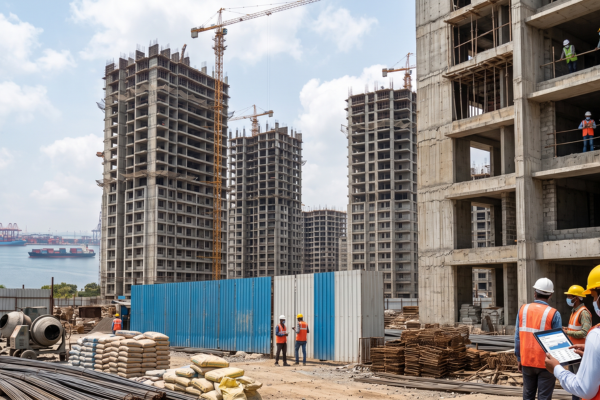
The Ministry of Housing and Urban Affairs (MoHUA) has advised all State Real Estate Regulatory Authorities (RERAs) to grant a four-month extension to eligible real estate projects affected by disruptions arising from the West Asia situation. In an advisory issued in the past week, the Ministry invoked the Force Majeure provisions under the Real Estate (Regulation and Development) Act, 2016, following a Finance Ministry memorandum that classified the situation as a "war" for contractual purposes. The advisory applies to projects whose original, revised or previously extended completion deadlines fall on or after February 28, 2026. The Ministry has also recommended a common order for all eligible projects to simplify the extension process and reduce regulatory procedures.Read more
16 hours ago
Digital commercial property finance platform Brickflow has launched an automated Decision-in-Principle (DIP) service for brokers in collaboration with lender Together, enabling instant lending decisions for bridging loans and commercial term finance. The new capability allows brokers to obtain automated DIPs within seconds through the Brickflow platform, reducing processing times and manual intervention during the early stages of the lending process. The launch follows a technical integration between the two firms and is intended to streamline commercial property finance applications. The announcement comes amid growing industry demand for faster lender response times, particularly during affordability assessments and initial lending approvals.Read more

17 hours ago
Mumbai's residential property market recorded its strongest July performance in more than 14 years, reflecting sustained demand despite a high base and evolving market conditions. According to Knight Frank India, property registrations within the Brihanmumbai Municipal Corporation (BMC) jurisdiction are estimated at 13,617 transactions in July 2026, marking an 8.3 per cent year-on-year increase. Stamp duty collections are projected to rise 8.9 per cent to approximately INR 1,223 crore, indicating continued momentum across the housing market. Industry stakeholders attributed the performance to infrastructure-led growth, resilient end-user demand, stable economic conditions and sustained interest in premium housing, while highlighting the need for continued policy support and faster project approvals to maintain growth.Read more

18 hours ago
The Navi Mumbai Municipal Corporation (NMMC) will organise a series of public participation programmes as part of the Centre's Har Ghar Tiranga campaign, scheduled from August 9 to 17. The initiative, undertaken in accordance with Central and Maharashtra government directives, aims to encourage citizens to hoist the national flag and participate in awareness activities marking the 150th anniversary of Vande Mataram. The civic body will conduct flag rallies, cleanliness drives, exhibitions, cultural programmes and school-based activities across the city. It will also establish dedicated counters at ward offices to make the national flag available to residents at concessional rates and encourage wider community participation.Read more

07 Aug 2026
The Indore district administration has demolished an illegally developed residential colony in Pipliya Rao village and reclaimed nearly two acres of government land valued at around INR 30 crore. The action was carried out as part of the administration's ongoing drive against illegal encroachments and unauthorised colonies. Officials found that the encroached land had been divided into residential and commercial plots without approvals, while an industrial unit was also operating on the site. The administration has urged homebuyers to verify land ownership and statutory approvals before purchasing plots.Read more

Advertisement

07 Aug 2026
The Andhra Pradesh government has appointed KPMG Advisory Services Pvt Ltd as the strategic support agency and knowledge partner to prepare the Economic Development Plan for the Tirupati Economic Region (TER). The project has been approved at a cost of around INR 3.54 crore after KPMG emerged as the highest-ranked bidder in the e-tender process. The initiative is part of the state's broader strategy to drive balanced regional development by dividing Andhra Pradesh into three economic regions Visakhapatnam, Tirupati and Amaravati with dedicated development plans for each region.Read more

07 Aug 2026
Maharashtra minister Mangal Prabhat Lodha has directed authorities to initiate stringent legal action against developers who have failed to hand over homes reserved for the Maharashtra Housing and Area Development Authority (MHADA). He said developers benefiting from additional development rights are required to transfer the prescribed housing stock, but several projects have remained pending for years. Lodha said stronger enforcement could make at least 1,000 additional MHADA homes available to eligible beneficiaries. The direction came during the Mumbai Board’s lottery for 2,640 homes, which received 75,127 applications.Read more

07 Aug 2026
Serentica Renewables has commissioned the first phase of its 1 GWh Battery Energy Storage System (BESS) project in Bikaner, marking its entry into utility-scale energy storage for India's commercial and industrial (C&I) sector. The initial phase comprises a 200 MWh battery storage system designed to support round-the-clock renewable power supply for industrial consumers. The project underpins one of the world's first time-block-based round-the-clock renewable energy arrangements for the C&I segment. The company also plans to build a 7 GWh battery order pipeline over the next two years as it expands its energy storage portfolio to improve the reliability of renewable power for industrial users.Read more

07 Aug 2026
A consortium led by Swiss-Japanese waste management company Kanadevia Inova plans to begin construction of a USD 1.5 billion waste-to-energy plant in Casablanca later this year, with full operations expected by mid-2030. The project, developed in partnership with Morocco's Nareva and Japan's Itochu, aims to process around 1.5 million metric tons of waste annually while generating 115 megawatts of electricity. The facility is expected to reduce methane emissions from the Mediouna landfill, improve waste management in Morocco's largest city, and supply electricity to nearly one million people.Read more

07 Aug 2026
Tamil Nadu Chief Minister C. Joseph Vijay has virtually inaugurated infrastructure projects worth INR 112.85 crore, covering multiple sectors aimed at strengthening public amenities and civic infrastructure. The projects include improvements to roads, public buildings, water supply and other essential facilities across different parts of the state. The government said the initiatives are intended to enhance service delivery, improve urban and rural infrastructure, and support balanced regional development through continued investment in public assets.Read more

Advertisement

07 Aug 2026
The Maharashtra government has asked officials to speed up the second phase of the Karanja Fishing Harbour project in Raigad by deploying experienced technical staff and modern equipment. The project aims to strengthen fishing infrastructure, improve operational facilities and benefit around 6,600 fishermen. While the first phase has largely been completed by the Maharashtra Maritime Board, the proposal for the second phase is under review after the government sought revisions. Once completed, the expanded harbour will increase operational capacity and provide several new facilities for the fishing community.Read more

07 Aug 2026
Completion of the Chennai-Bengaluru Expressway has been delayed due to pending land acquisition on a 25.5-km stretch in Tamil Nadu, despite most sections of the corridor being ready. Ongoing legal proceedings in the Madras High Court have slowed acquisition of the remaining land, preventing the National Highways Authority of India (NHAI) from completing the final link. Once operational, the access-controlled expressway is expected to significantly reduce travel time between Chennai and Bengaluru while improving freight movement and regional connectivity.Read more

07 Aug 2026
Smartworks Coworking Spaces Ltd has leased 1.41 lakh sq ft of office space at Bharti Real Estate's Worldmark commercial development in Aerocity, Delhi, as part of its ongoing expansion in the Delhi-NCR office market. The Gurugram-based flexible workspace operator will invest INR 25 crore to establish a new centre, which is expected to become operational by September. The expansion comes amid sustained demand for premium office space, particularly from Global Capability Centres (GCCs), and further strengthens the company's presence in one of India's largest enterprise office markets. As of the end of June, Smartworks operated 70 centres spanning 16.9 million sq ft across 15 cities in India and Singapore.Read more

07 Aug 2026
Three employees sustained injuries after a section of ceiling plaster collapsed inside the Brihanmumbai Electric Supply and Transport (BEST) undertaking's Majas bus depot in Mumbai. The incident occurred while maintenance work was underway at the facility, prompting authorities to rush the injured workers to hospital for treatment. Following the accident, BEST officials initiated an inspection of the affected structure and began assessing the condition of the depot. The incident has renewed concerns over the maintenance and structural safety of ageing public infrastructure across Mumbai.Read more

07 Aug 2026
Police in Maharashtra have arrested three individuals for allegedly attempting to extort INR 8.5 crore from a real estate developer in Thane district. According to investigators, the accused repeatedly threatened the builder and demanded money over multiple attempts before law enforcement intervened. Acting on the developer's complaint, police launched an investigation, gathered evidence and apprehended the suspects. The case is being investigated under provisions related to extortion, criminal intimidation and other relevant offences, with authorities probing whether additional individuals were involved.Read more

Advertisement

07 Aug 2026
A wholly owned subsidiary of Shalimar Paints Ltd. has signed an agreement to sell its commercial property in Gurugram for INR 50 crore as part of the company's strategy to monetise non-core assets and strengthen its balance sheet. In a separate institutional real estate transaction, Edelweiss Emerging Asset Allocation AIF (EAAA) has acquired a Grade A office park in Pune, reinforcing investor interest in income-generating commercial assets despite evolving market conditions. The Gurugram property divestment is expected to unlock value for Shalimar Paints and improve liquidity, while the Pune acquisition reflects continued confidence in India's office real estate market. Both transactions highlight the sustained momentum in commercial real estate, with corporates monetising assets and institutional investors expanding their portfolios through strategic acquisitionsRead more

07 Aug 2026
India needs to simplify land acquisition and address structural issues in land and capital markets to attract higher investments, according to NITI Aayog Vice Chairman Ashok Kumar Lahiri. Speaking at the NCAER India Policy Forum 2026, he said ease of doing business reforms have progressed but more work is needed at the grassroots level. He also highlighted the importance of domestic savings, public infrastructure spending and policy support in driving investment. Lahiri said India has the potential to achieve its Viksit Bharat 2047 goal if structural bottlenecks are removed and the country continues improving its investment environment.Read more

07 Aug 2026
The Dharavi Redevelopment Project (DRP) has secured the clearance of more than 2,200 residential units in Sector 6, paving the way for demolition activities in Meghwadi, one of the first clusters to undergo redevelopment. Demolition is part of the redevelopment of the 35-acre railway land parcel in Matunga, where rehabilitation buildings are planned for eligible residents under the project. Residents who have vacated have either shifted to transit accommodation or opted for monthly rental assistance, while discussions continue with those yet to relocate. Authorities said the clearance marks a significant milestone in the implementation of the Adani-led Dharavi redevelopment, although relocation efforts continue in other parts of Sector 6.Read more

07 Aug 2026
India's leading listed real estate developers are preparing an aggressive pipeline of residential launches in FY27, with companies including DLF, Godrej Properties, Prestige Estates and Lodha Developers focusing on premium and luxury housing across major cities. Despite expectations of a more measured pace of residential sales growth compared with the previous fiscal, developers are relying on new launches, stronger execution and sustained demand for branded housing to achieve ambitious sales targets. The strategy reflects continued confidence in the premium residential segment even as the broader market enters a more balanced growth phase.Read more

07 Aug 2026
Host Hotels & Resorts has raised its full-year 2026 adjusted funds from operations (FFO) forecast following better-than-expected demand across its luxury and upscale hotel portfolio. Strong group travel, continued spending by affluent travellers and higher domestic and international visitor numbers during the recently concluded FIFA World Cup supported the company's performance. The real estate investment trust also increased its room revenue growth guidance for the year after reporting second-quarter results that exceeded analysts' expectations for both adjusted FFO and total revenue.Read more

Advertisement

07 Aug 2026
Construction of the Vadodara station for the Mumbai-Ahmedabad High-Speed Rail (MAHSR) corridor has reached a significant milestone, with major structural work completed at the concourse, platform and track levels. Steel fabrication for the station building is now progressing, marking another step in the development of India's first bullet train project. The elevated station, being built above the existing railway infrastructure, is designed to integrate seamlessly with Vadodara Junction while enhancing passenger connectivity and supporting future high-speed rail operations.Read more

07 Aug 2026
Property Share Investment Trust has filed draft IPO papers for its fourth Small and Medium Real Estate Investment Trust (SM REIT) scheme, PropShare Lumina, with an issue size of up to INR 485 crore. The scheme offers investors an opportunity to invest in two fully leased Grade A+ commercial office towers in Noida's OESPL Business Centre. The asset is leased to 19 tenants and spans over 437,025 square feet of super built-up area. The proposed issue reflects the growing adoption of SM REITs, a SEBI-regulated investment vehicle designed to widen retail participation in income-generating commercial real estate.Read more

07 Aug 2026
The Delhi Development Authority (DDA) has extended the last date for submitting applications under its Narela housing scheme to August 31, 2026. The extension applies to the current allotment of residential flats in Narela and is intended to provide prospective homebuyers with additional time to complete the application process. The revised schedule has been notified through an official order issued by the authority, while all other terms and conditions of the scheme remain unchanged.Read more

07 Aug 2026
China is strengthening its efforts to prevent and reduce the impact of landslides and floods as extreme weather events become more frequent. The government plans to improve monitoring of geological hazards, particularly shallow landslides and debris flows caused by heavy rainfall, while enhancing flood management infrastructure. Authorities have identified key high-risk regions for focused intervention and are also using aerospace remote sensing to improve risk detection. The move follows a series of deadly landslides and ongoing heavy rainfall that has raised concerns over public safety and infrastructure resilience.Read more

07 Aug 2026
Actor Madhuri Dixit and her husband, Dr Shriram Nene, have sold two properties in Mumbai's western suburbs for a combined value of INR 9.25 crore. The transactions include a commercial office in Andheri West and a residential apartment in Juhu, according to property registration documents reviewed by CRE Matrix. Both properties recorded substantial appreciation over their purchase prices, reflecting the sustained demand for residential and commercial real estate in established micro-markets such as Andheri and Juhu. The deals also highlight continued activity in Mumbai's premium property market.Read more

Advertisement

07 Aug 2026
Delhi's Indira Gandhi International Airport has expanded its domestic network to 90 destinations following the launch of direct flight services to Daman. Operated by Alliance Air, the new route further strengthens the airport's domestic connectivity, which now includes direct access to 32 of India's 36 states and Union Territories. The airport currently handles more than 1,050 domestic flight movements every day and serves over 5 million domestic passengers each month. The expanded network also includes seasonal winter destinations such as Khajuraho and Jaisalmer, reinforcing Delhi's position as India's largest domestic aviation hub.Read more

07 Aug 2026
State-owned NBCC Ltd has secured a project management consultancy (PMC) contract worth INR 780.38 crore from the Reserve Bank of India (RBI) for the development of an office complex and residential quarters in Amaravati, Andhra Pradesh. Under the project, NBCC will oversee the construction of the RBI's new office at Nelapadu and residential accommodation for its officers and staff at Inavolu. The order further strengthens NBCC's government project portfolio, where the company continues to execute large-scale institutional, infrastructure and redevelopment assignments across the country.Read more

07 Aug 2026
The Odisha government has approved the proposal for the Bhubaneswar–Cuttack–Puri–Paradip City Economic Region (BKPBER) project, an integrated urban development initiative aimed at accelerating investment, industrial growth, tourism, logistics and employment generation. The project, estimated to cost INR 55,000 crore, will be implemented under the City Economic Region (CER) scheme with financial support from the Asian Development Bank and the Centre. Covering the urban local bodies of Bhubaneswar, Cuttack, Puri and Jagatsinghpur districts, the initiative seeks to strengthen regional connectivity, develop modern infrastructure and position the corridor as a major economic hub in line with Odisha Vision 2036.Read more

07 Aug 2026
Indian homes have transformed dramatically over the past few decades. As cities expanded, land became costlier and apartments replaced sprawling ancestral homes, many traditional spaces quietly disappeared from everyday life. Courtyards, verandahs, terraces and grain stores once played an important role in family routines, climate-responsive design and cultural traditions. Today, compact layouts, changing lifestyles and modern construction practices have made these spaces increasingly rare. Here's a look at ten features that were once integral to Indian homes and the reasons they have gradually faded from contemporary residential architecture.Read more

07 Aug 2026
UK-based building materials manufacturer Ibstock has lowered its outlook for full-year earnings, saying its annual profit is likely to be at the lower end of market expectations as the country's construction sector continues to face weak demand. The company reported lower revenue and a pre-tax loss for the first half of the year, affected by subdued private housebuilding activity, higher energy costs and a non-cash impairment charge. Despite expecting improved earnings in the second half, Ibstock said market conditions remain challenging due to economic and political uncertainties.Read more

Advertisement





Advertisement